

Direct Commands Done Right: PCIT's Proven Formula for Parenting Clarity

As parents and caregivers, we naturally want to soften our requests to sound gentle and collaborative. Phrases like "Can you pick up your toys?" or "Do you want to get your shoes on?" feel polite and less directive. But here's the reality: these indirect commands often backfire. Parent-Child Interaction Therapy (PCIT), dedicates significant attention to this exact dynamic, explaining why kids hear these as optional questions rather than instructions. You say “Are you coming to dinner?” and your child cheerfully answers "No thanks!" and returns to their LEGO masterpiece. This does nothing other than leaving you frustrated and repeating yourself.
Indirect commands create confusion because they mimic questions or casual observations. "Let's get ready for bed" sounds like a group suggestion. "Wow, there sure are a lot of shoes by the door" registers as interesting commentary—perhaps the start of a weather report or nature documentary narration. PCIT research shows kids simply lack the non-verbal abilities adults assume they have. They respond literally to the words, not the hidden expectation behind our tone.
Before You Speak: Pause and Prioritize Your Commands
First off, really think about all the directives and commands you give your child(ren) throughout the day—and only issue the ones that truly matter. We often sprinkle instructions into every moment ("Sit nicely," "Eat your peas," "Stop touching that"), turning life into an endless obedience test. But constant commands dilute their impact, overwhelm kids' attention, and create compliance fatigue. Ask yourself: "Does this need my direction right now, or can they figure it out?" Reserve direct commands for non-negotiables like safety, routines, or key responsibilities. This selective approach preserves your authority for what counts, gives kids space to practice independence elsewhere, and makes compliance more likely when you do speak up.
PCIT's 4 Key Elements of Effective Direct Commands
PCIT provides a clear, research-backed framework for commands that actually work. Direct commands follow these four essential principles:
One clear instruction at a time. Avoid multi-step asks like "Pick up your toys and wash your hands."
Said calmly. A steady, neutral tone reduces defensiveness and models emotional regulation.
Stated as what to do, not what not to do. "Please walk" works better than "Don't run."
With an actual expectation that it happens. Deliver it confidently—you mean business, kindly.
These elements aren't about becoming a drill sergeant. They're about compassionate clarity that respects your child's need for predictable structure. PCIT studies demonstrate kids' nervous systems respond positively to this approach, reducing power struggles and building cooperation over time.
Direct vs. Indirect: A Quick Swap Guide
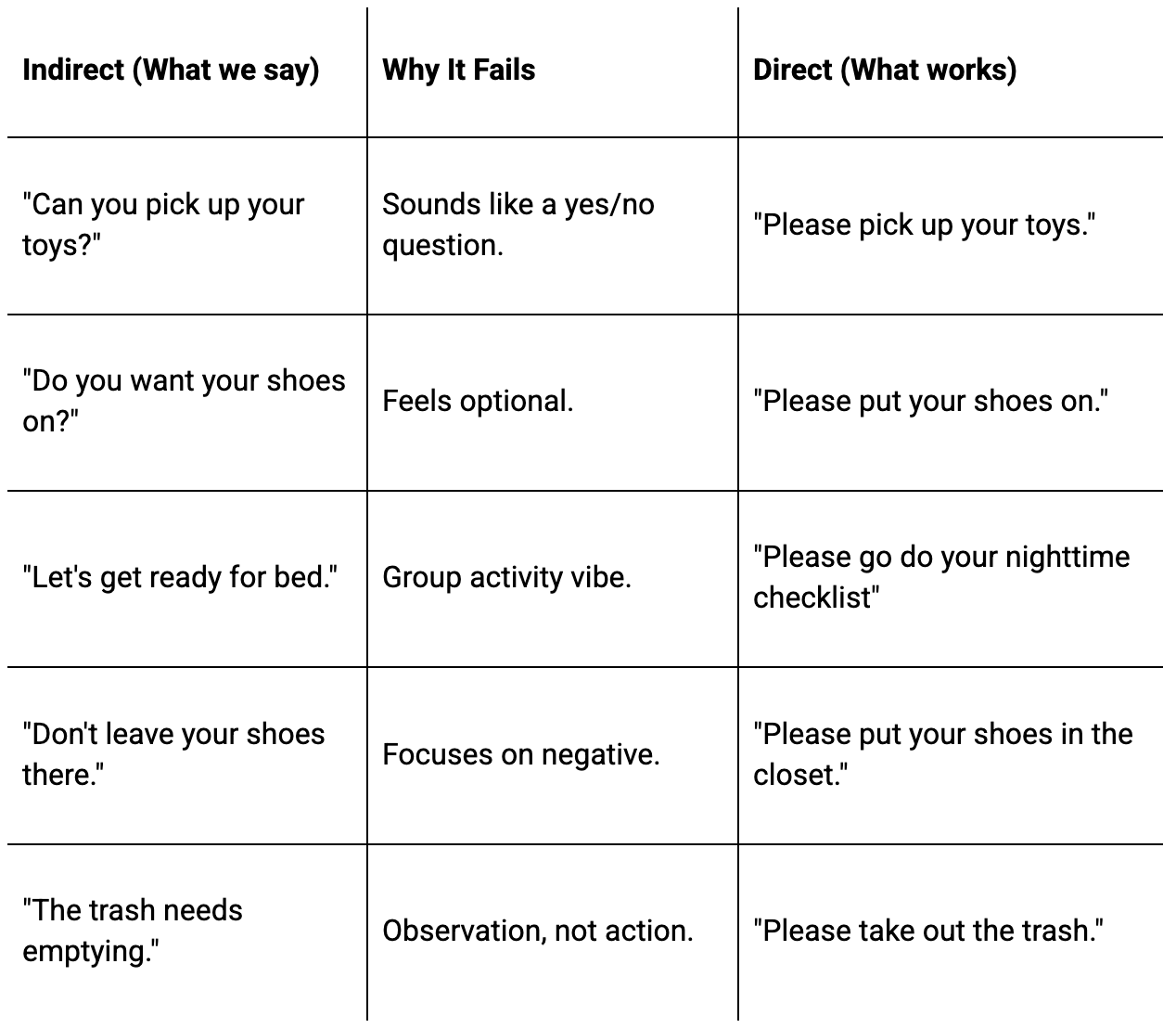
Why Direct Commands Feel Kinder (Even If They Sound Firmer)
Many parents worry directness will come across as harsh or bossy. PCIT reassures us the opposite is true. Vague hints delivered with tense shoulders and a tight smile create more stress than a calm "Please pick up your toys now." Children thrive when they know exactly what's expected—no mind-reading, no guesswork. Pair the command with "please," your warmest tone, and specific praise afterward: "Great job listening the first time—thank you!" This sequence, straight from PCIT protocol, reinforces positive behavior without nagging.
The Science Behind Why This Works
PCIT isn't just theory—it's an evidence-based intervention developed over decades, with randomized controlled trials showing significant improvements in child compliance, parent confidence, and family dynamics. Indirect communication patterns and commands fuel up to 80% of daily power struggles. When parents master direct commands using the four elements, tantrums decrease, routines smooth out, and everyone conserves emotional energy.
Try This Tomorrow: A One-Day Experiment
Pick one daily routine—morning shoes, evening cleanup, or bedtime—and commit to the four elements plus selective use of commands:
Notice your natural indirect phrasing and whether it's truly necessary.
Pause and swap to direct (only if needed).
Deliver calmly with expectation.
Praise specifically when they comply.
Track what shifts. You'll likely notice fewer repeats, less resistance, and more predictable success. This small adjustment compounds over time, freeing up mental space for connection rather than correction.
Clarity isn't about control; it's compassionate parenting that honors how children's brains actually work. Direct commands build skills for life—listening, responsibility, and emotional security. What's one indirect command you'll swap this week? I'd love to hear how it goes.